You have been diagnosed with hypothyroidism. You are taking your thyroid medication every single morning — faithfully, without fail. And yet you still feel exhausted. You still struggle with stubborn weight that refuses to move. Brain fog clouds your thinking. Your hair is still falling. Your skin is still dry. Your digestion is still off.
If this sounds familiar, you are not alone. And more importantly — you are not imagining it.
Millions of thyroid patients across India take their medication correctly and still do not feel well. The reason, in a very large number of cases, comes down to something that most doctors never check, never discuss, and never treat:
Your gut.
The connection between your gut health and your thyroid function is one of the most significant — and most overlooked — discoveries in modern integrative medicine. At Dr. Sandeep Nagre Diabetes, Obesity & Thyroid Reversal Center in Chhatrapati Sambhajinagar, addressing the gut-thyroid axis is a central pillar of every thyroid reversal protocol. And the results our patients experience speak for themselves.
In this article, Dr. Sandeep Nagre explains the science behind the gut-thyroid connection in simple, clear language — and what you can do about it.
First — How Does the Thyroid Actually Work?
Before understanding the gut connection, let us briefly understand what the thyroid does and how thyroid hormone works in the body.
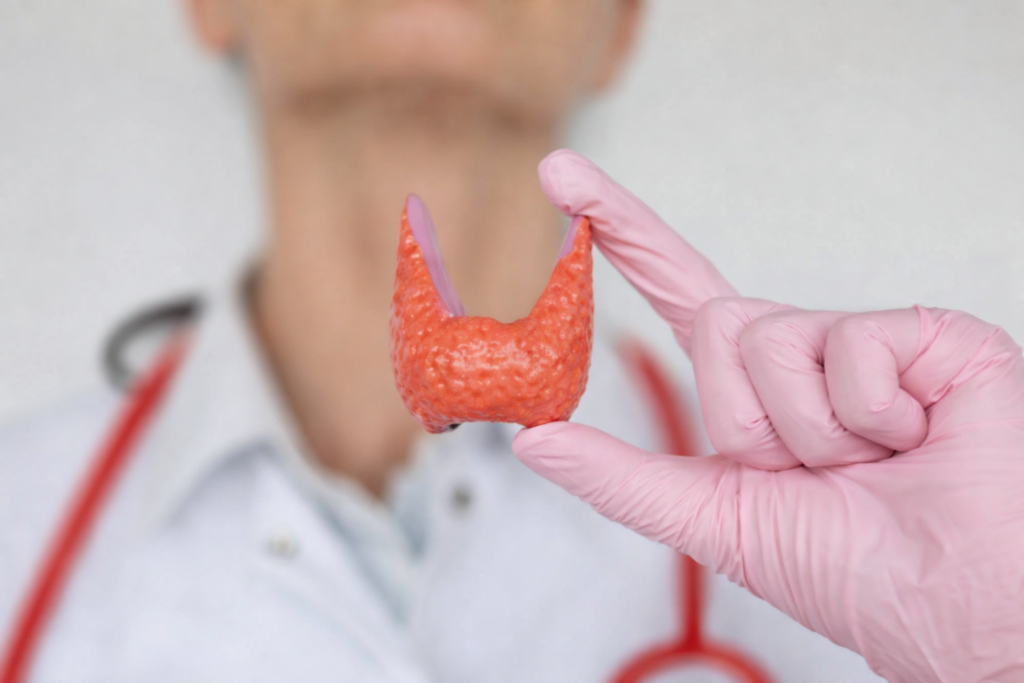
The thyroid gland — a small, butterfly-shaped gland at the base of your neck — produces two primary hormones: T4 (thyroxine) and a smaller amount of T3 (triiodothyronine).
T4 is the inactive form of thyroid hormone. Think of it as a “storage” hormone. For your body to actually use thyroid hormone, T4 must be converted into the active form — T3.
Here is the critical point that most people — and many doctors — overlook:
Up to 20% of this T4-to-T3 conversion happens in the gut.
If your gut is unhealthy, inflamed, or imbalanced, this conversion is impaired. Even if your thyroid gland is producing enough T4, your body may not be converting it into enough active T3 to function properly. The result? Classic hypothyroid symptoms — fatigue, weight gain, brain fog, constipation, hair loss — even when your TSH levels appear “normal” on paper.
This is why so many thyroid patients continue to feel unwell despite taking medication. Their TSH may be in range, but their active T3 is low — and the gut is the reason why.
The Gut-Thyroid Axis: What Science Tells Us
The relationship between the gut and the thyroid is bidirectional — meaning each one directly affects the other. Researchers have identified several key mechanisms through which gut health impacts thyroid function:
1. T4 to T3 Conversion in the Gut
As mentioned above, a significant portion of the conversion of inactive T4 to active T3 occurs in the intestinal lining. An inflamed, damaged, or dysbiotic gut impairs this conversion, leading to functional hypothyroidism even when the thyroid gland itself is functioning.
2. The Gut Microbiome and Thyroid Hormone Metabolism
Your gut microbiome — the trillions of bacteria, fungi, and other microorganisms living in your digestive tract — plays a direct role in thyroid hormone metabolism. Specific beneficial gut bacteria are responsible for producing an enzyme called intestinal sulfatase, which is essential for activating thyroid hormones.
Studies have shown that patients with hypothyroidism consistently have a less diverse gut microbiome compared to healthy individuals — with lower levels of beneficial bacteria like Lactobacillus and Bifidobacterium, and higher levels of harmful bacteria.
3. Leaky Gut and Autoimmune Thyroid Disease (Hashimoto’s)
This is perhaps the most important connection of all. Hashimoto’s Thyroiditis — the most common cause of hypothyroidism — is an autoimmune condition. This means the immune system is mistakenly attacking the thyroid gland.
Where does 70–80% of your immune system live? In your gut.
When the gut lining becomes damaged and permeable — a condition known as “leaky gut” or intestinal permeability — undigested food particles, bacteria, and toxins leak into the bloodstream. The immune system mounts an attack against these foreign invaders. In genetically susceptible individuals, this immune response can mistakenly target the thyroid gland — triggering or worsening Hashimoto’s.
Multiple studies have demonstrated that healing leaky gut significantly reduces thyroid antibodies (Anti-TPO and Anti-Tg) and improves thyroid function in Hashimoto’s patients.
4. Nutrient Absorption and Thyroid Function
The thyroid gland requires specific nutrients to produce and activate thyroid hormones — most importantly iodine, selenium, zinc, iron, and Vitamin D. These nutrients must be absorbed through the gut lining.
A damaged or inflamed gut absorbs these nutrients poorly — even if you are eating the right foods or taking supplements. Healing the gut dramatically improves nutrient absorption, directly supporting thyroid hormone production.
5. Gut Dysbiosis and Thyroid Medication Absorption
Even more practically — if you are taking thyroid medication (levothyroxine/thyroxine), an unhealthy gut directly affects how much of that medication is actually absorbed into your bloodstream. Studies have shown that patients with gut dysbiosis, SIBO (Small Intestinal Bacterial Overgrowth), or low stomach acid absorb thyroid medication poorly — meaning they may need higher doses simply because their gut is not absorbing it effectively.
Signs That Your Gut May Be Affecting Your Thyroid
How do you know if your gut health is contributing to your thyroid problems? Look for these overlapping signs — conditions that indicate both gut dysfunction and thyroid dysfunction are present simultaneously:
- Persistent fatigue despite normal or treated TSH levels
- Bloating, gas, or digestive discomfort after meals
- Chronic constipation or alternating constipation and diarrhea
- Food sensitivities — especially to gluten, dairy, or certain vegetables
- Skin issues — eczema, psoriasis, acne, or persistent dryness
- Brain fog, poor concentration, and memory issues
- Elevated thyroid antibodies (Anti-TPO or Anti-Tg) — indicating autoimmune activity
- Difficulty losing weight despite dieting and medication
- History of antibiotic use, which disrupts the gut microbiome
- History of acid reflux or low stomach acid
If you recognize several of these signs in yourself, there is a very strong possibility that your gut health is playing a significant role in your thyroid dysfunction.
What Damages Gut Health in the First Place?
Understanding what causes gut damage helps us understand both why thyroid problems are so common today — and how to reverse them. The most common contributors to gut damage include:
1. Modern Diet High in Processed Foods Refined carbohydrates, artificial additives, preservatives, industrial seed oils, and excess sugar all damage the gut lining and promote harmful bacterial overgrowth.
2. Chronic Stress Cortisol — the stress hormone — directly damages the gut lining, reduces stomach acid production, and disrupts the gut microbiome. The gut-brain axis means that chronic stress is one of the fastest routes to gut dysfunction.
3. Overuse of Medications Antibiotics, NSAIDs (painkillers like ibuprofen), antacids (PPIs), and even thyroid medication itself can disrupt gut bacteria and damage the intestinal lining with long-term use.
4. Gluten Sensitivity Gluten — a protein found in wheat, barley, and rye — has been shown to trigger intestinal permeability (leaky gut) in susceptible individuals. There is a particularly strong association between gluten sensitivity and Hashimoto’s thyroiditis. Many Hashimoto’s patients experience dramatic improvement when gluten is removed from the diet.
5. Environmental Toxins Pesticides, heavy metals, and environmental pollutants accumulate in the gut and disrupt the microbiome and intestinal lining. Ayurveda has long recognized the role of “Ama” — accumulated toxins — in driving disease.
6. Sedentary Lifestyle Physical inactivity reduces gut motility, promotes constipation, and negatively impacts the diversity of the gut microbiome.
How We Treat the Gut-Thyroid Connection at Dr. Sandeep Nagre’s Center
At Dr. Sandeep Nagre’s Thyroid Reversal Center, our approach to thyroid reversal always begins with a thorough assessment of gut health. We treat the gut and the thyroid simultaneously — because one cannot fully heal without the other.
Here is an overview of our integrated gut-thyroid healing protocol:
Step 1 — Comprehensive Gut & Thyroid Assessment
We begin with a thorough evaluation including full thyroid panel (TSH, Free T3, Free T4, Anti-TPO, Anti-Tg), gut health markers, nutritional deficiency testing, and Ayurvedic Prakriti (body type) assessment. This gives us a complete picture of what is driving your thyroid dysfunction specifically.
Step 2 — Gut Healing Protocol
The foundation of thyroid reversal at our center is healing the gut lining, restoring a healthy microbiome, and eliminating the triggers of intestinal permeability. This includes:
- Removal of inflammatory foods (processed foods, refined sugar, identified food sensitivities)
- Therapeutic use of gut-healing Ayurvedic formulations
- Probiotic and prebiotic support to restore beneficial bacteria
- Healing of intestinal permeability with specific nutrients and herbs
- Correction of stomach acid levels and digestive enzyme support
Step 3 — Anti-Inflammatory Nutrition Plan
Dr. Swati Nagre designs a completely personalized anti-inflammatory nutrition plan that supports both gut healing and thyroid function. This includes foods rich in selenium (for T4-to-T3 conversion), zinc, iodine, Vitamin D, and iron — the key nutrients the thyroid depends on.
For patients with Hashimoto’s, a gluten evaluation and often a gluten-free trial is recommended as part of the nutritional protocol.
Step 4 — Panchakarma Detox Therapies
Ayurvedic Panchakarma therapies are used to remove accumulated toxins (Ama) from the gut, liver, and lymphatic system — reducing the toxic burden that drives chronic inflammation and autoimmune activity. Specific Panchakarma treatments are selected based on each patient’s individual assessment.
Step 5 — Nutritional Deficiency Correction
Targeted supplementation of key thyroid-supportive nutrients — selenium, zinc, Vitamin D, iron, magnesium, and B vitamins — is incorporated based on each patient’s specific deficiency profile. Healing the gut ensures these nutrients are actually absorbed and utilized.
Step 6 — Stress Management
Cortisol management through yoga, pranayama, meditation, and lifestyle modification is an essential component — both for gut healing and for reducing the autoimmune activity that drives Hashimoto’s.
Step 7 — Gradual, Medically Supervised Medication Reduction
As the gut heals and thyroid function improves — evidenced by improving TSH, Free T3, and reducing antibody levels — Dr. Sandeep Nagre gradually and safely reduces thyroid medication in a controlled, monitored manner. Many patients ultimately achieve normal thyroid function with significantly reduced or no medication.
What Results Do Our Patients Experience?
When the gut-thyroid connection is properly addressed, the results are often remarkable:
- TSH levels returning to normal range and stabilizing
- Dramatic reduction in thyroid antibodies (Anti-TPO and Anti-Tg)
- Significant improvement in energy, clarity, and mood within weeks
- Resolution of stubborn weight gain
- Improvement in hair loss and skin quality
- Reduced bloating, improved digestion, and regular bowel movements
- Reduction or elimination of thyroid medication under medical supervision
Many patients tell us: “This is the first time in years I actually feel like myself again.” That is what becomes possible when you treat the root cause — not just the TSH number.
Frequently Asked Questions
Q: Can Hashimoto’s Thyroiditis be reversed through gut healing? While Hashimoto’s is an autoimmune condition, many patients experience significant reduction in thyroid antibodies and improvement in thyroid function when gut health is addressed. Complete remission is possible in a number of cases, particularly when intervention begins early and is comprehensive.
Q: How long does it take to see results from gut healing for thyroid? Most patients notice improvement in energy, digestion, and overall wellbeing within 4–8 weeks. Measurable improvement in TSH and antibody levels typically occurs within 3–6 months of a comprehensive gut-thyroid healing protocol.
Q: Do I need to stop my thyroid medication to follow this program? Absolutely not. Medication is never stopped abruptly. As your thyroid function improves through the program, Dr. Sandeep Nagre will gradually and safely reduce your medication under close medical supervision. Many patients end up needing significantly less — or none at all.
Q: Is gluten-free diet necessary for all thyroid patients? Not necessarily for all patients. However, for patients with Hashimoto’s or those who test positive for gluten sensitivity, a gluten-free trial for 3–6 months is strongly recommended and often produces dramatic improvement.
Q: Can Ayurvedic treatment alone heal the gut and reverse thyroid problems? Ayurveda has powerful tools for gut healing and thyroid support — but the best results come from an integrated approach that combines Ayurvedic therapies with modern medical monitoring, evidence-based nutrition, and targeted supplementation. This integrated approach is exactly what Dr. Sandeep Nagre’s center provides.
Taking the First Step
If you have been living with hypothyroidism and still do not feel well despite taking your medication — your gut is very likely part of the answer.
The thyroid and the gut are inseparably connected. Healing one requires healing the other. And when both are addressed together — through an integrated, personalized, root-cause approach — the results can be truly life-changing.
At Dr. Sandeep Nagre’s Thyroid Reversal Center in Chhatrapati Sambhajinagar, we have helped hundreds of thyroid patients finally feel well again — by doing what most conventional treatment never does: treating the whole person, not just the TSH number.
Your thyroid can heal. Your gut can heal. And you can feel like yourself again.
The first step is simply a conversation with Dr. Sandeep Nagre.
📞 Call Us: +91 9309197693 💬 WhatsApp: +91 9309197693
📍 Dr. Sandeep Nagre Diabetes, Obesity & Thyroid Reversal Center, Matrix Business Center, Kalda Corner, Dargah Road, Chhatrapati Sambhajinagar